If you’ve ever stared at your Google Ads bidding settings wondering whether to stick with Manual CPC or switch to Smart Bidding, you’re not alone. The debate around manual CPC vs smart bidding is one of the most common questions we get from small business owners trying to stretch their ad budget further.
The wrong choice can quietly drain your budget or leave serious conversions on the table. In this guide, you’ll learn exactly what each bidding strategy does, when to use each one, and how to make the switch without tanking your campaign performance.
What Is Manual CPC vs Smart Bidding?
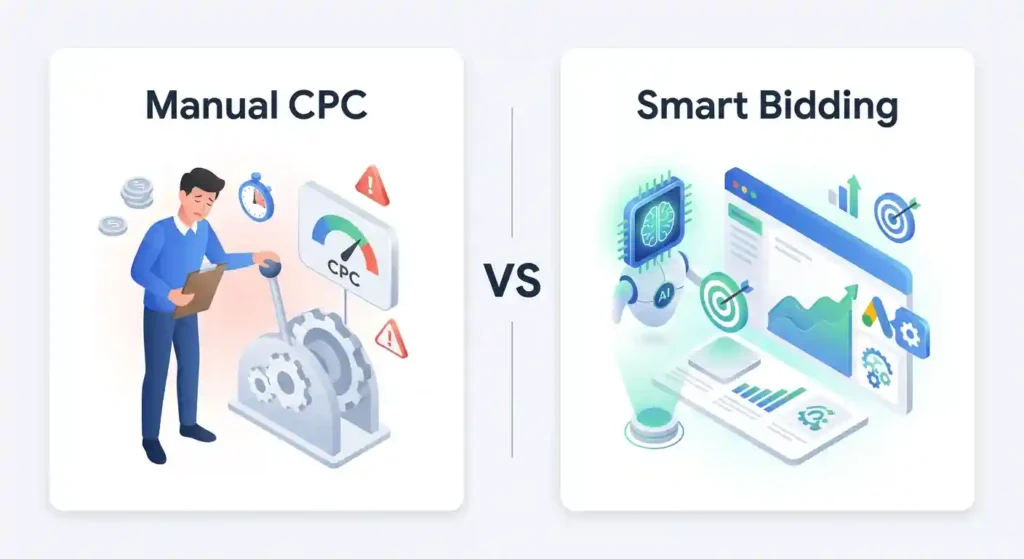
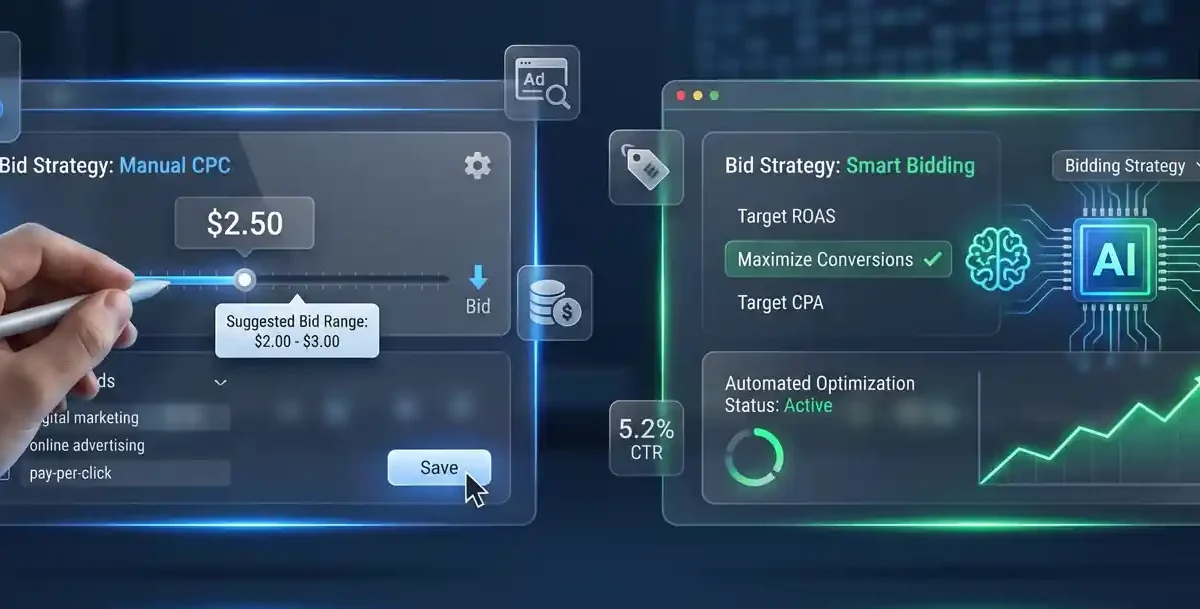
Manual CPC (Cost-Per-Click) means you set the maximum amount you’re willing to pay for each click on your ad. Google will never charge you more than that amount per click. You’re in full control but you’re also doing all the heavy lifting yourself.
Free Google Ads Audit
Want Me to Review Your Account?
I will check your campaigns, tracking setup, and show you exactly where the opportunities are — completely free.
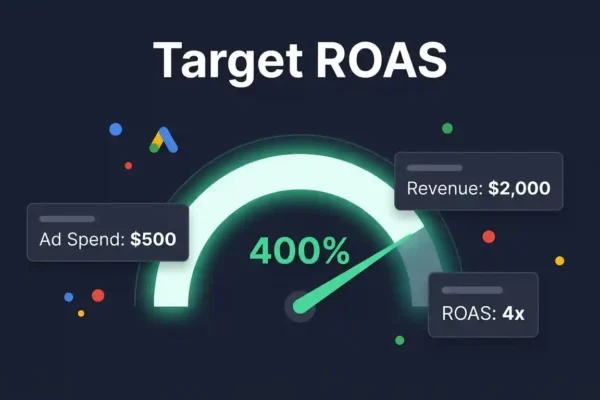
Smart Bidding is Google’s automated bidding system. It uses machine learning to adjust your bids in real time based on signals like device, location, time of day, audience behavior, and more. Common Smart Bidding strategies include Target CPA (cost per acquisition), Target ROAS (return on ad spend), Maximize Conversions, and Maximize Conversion Value.
In short: Manual CPC gives you control. Smart Bidding gives you automation.
Why Your Bidding Strategy Matters More Than You Think
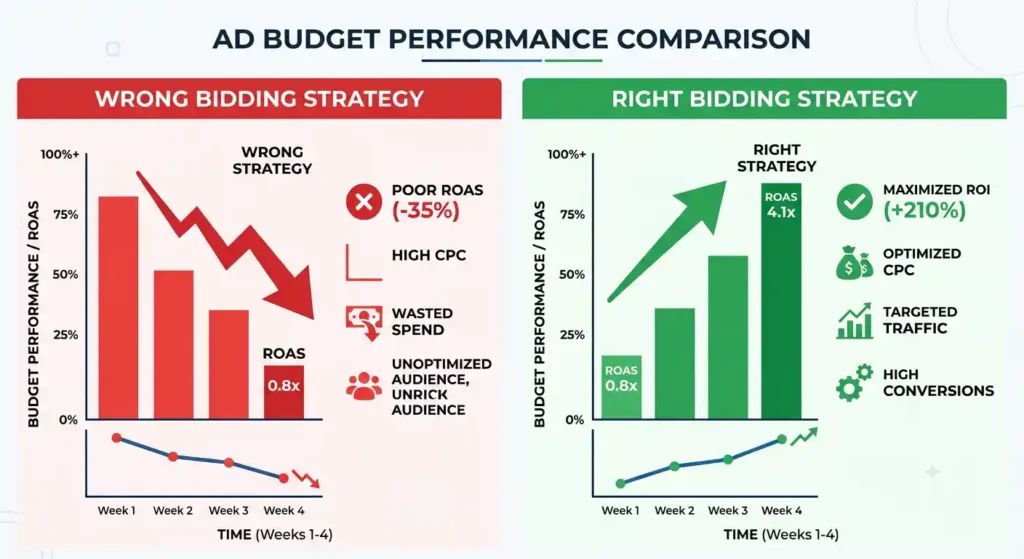
Your bidding strategy directly affects how much you pay per click, who sees your ads, and how often you win auctions. It’s not just a background setting, it’s one of the biggest levers in your entire Google Ads account.
Here’s what’s at stake:
With Manual CPC, you might overpay for low-converting keywords or miss competitive auctions because your bids aren’t flexible enough. With Smart Bidding, you might hand over control to Google before your account has enough data which often leads to wasted spend in the early weeks.
In our experience auditing hundreds of small business Google Ads accounts, the biggest mistakes we see aren’t bad ad copy or wrong keywords they’re bidding strategies applied at the wrong stage of a campaign’s life.
(For more on optimizing your campaigns from the ground up, see our guide on Google Ads campaign structure for small businesses.)
How to Choose the Right Bidding Strategy: A Step-by-Step Approach
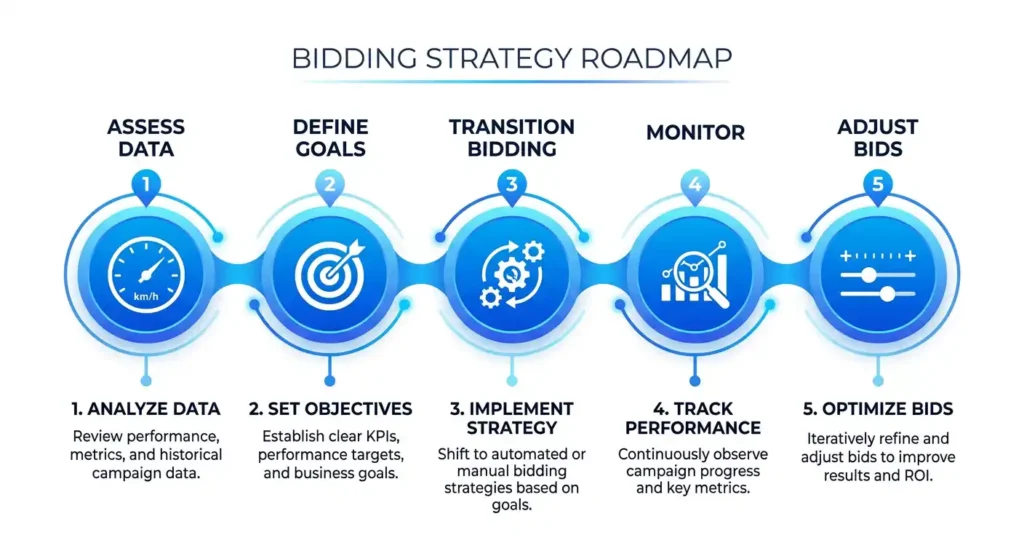
Step 1: Assess Your Conversion Data
Smart Bidding needs data to work. Google recommends at least 30–50 conversions per month before switching to Target CPA or Target ROAS. If your account is newer or running low volume, Smart Bidding will essentially be guessing.
Action: Check your campaign’s conversion history in the last 30 days. Under 30 conversions? Stay on Manual CPC or use Maximize Conversions as a stepping stone.
Step 2: Define What “Success” Looks Like for Your Campaign
Are you trying to generate leads at a specific cost? Drive e-commerce sales with a target return? Or simply get as many clicks as possible to build brand awareness?
Your goal determines your bidding strategy:
- Lead generation on a tight budget → Target CPA
- E-commerce with clear revenue data → Target ROAS
- New campaign building volume → Maximize Conversions (without a target)
- Tight budget control needed → Manual CPC
Step 3: Start Manual, Then Transition to Smart Bidding
This is the approach we recommend for most small businesses. Launch new campaigns with Manual CPC to gather data and understand which keywords and ads perform best. Once you hit 30+ conversions per month, consider transitioning to Maximize Conversions or Target CPA.
Don’t skip this step. Jumping straight to Smart Bidding with a cold account is one of the fastest ways to burn your budget.
Step 4: Monitor Performance During the Learning Period
When you switch to Smart Bidding, Google enters a “learning period” that typically lasts 1–2 weeks. During this time, performance may fluctuate this is normal.
What to watch: Keep an eye on your cost per conversion, impression share, and click-through rate. Don’t make major changes during the learning period, as this resets the clock.
Step 5: Use Bid Adjustments Strategically with Manual CPC
If you’re sticking with Manual CPC, bid adjustments are your best friend. Increase bids for your best-performing devices, locations, or times of day. Decrease bids for segments that waste spend.
For example, if mobile drives 60% of your conversions, consider a +20% mobile bid adjustment.
Common Mistakes to Avoid
Switching to Smart Bidding too early. Without sufficient conversion data, Google’s algorithm can’t optimize effectively. You’ll often see higher costs and lower conversion rates in the first weeks.
Setting unrealistic Target CPA goals. If your actual cost per lead has been $50, setting a Target CPA of $20 will cause Google to limit your ad delivery significantly. Start close to your current CPA and reduce it gradually.
Never adjusting Manual CPC bids. Manual bidding isn’t “set it and forget it.” If you’re not reviewing and adjusting bids weekly, you’re likely over- or under-bidding on important keywords.
Ignoring the learning period. Many advertisers panic during performance dips after switching strategies and revert immediately. Give Smart Bidding at least 2 weeks before drawing conclusions.
Using Smart Bidding for very low-budget campaigns. If your monthly budget is under $500, Smart Bidding often struggles to gather enough signal. Manual CPC may give you more predictable results.
Conclusion: Which Bidding Strategy Should You Use?
The honest answer: it depends on where your campaign is right now.
If you’re just getting started, use Manual CPC to gather data and stay in control. Once you’ve built a solid conversion history, Smart Bidding particularly Maximize Conversions or Target CPA can significantly improve your efficiency.
The key is to treat bidding strategy as something you evolve, not something you set once and forget. Small businesses that win with Google Ads are the ones that test, monitor, and optimize continuously.
Key Takeaways:
- Manual CPC gives you control; Smart Bidding gives you automation
- Smart Bidding needs at least 30 conversions/month to work effectively
- Start manual, collect data, then transition to Smart Bidding
- Always monitor the learning period before making judgments
- Avoid common mistakes like unrealistic CPA targets or switching too early